Ensuring ecological connectivity and community resilience through nature-based solutions (NbS) in Jamaica & Grenada


The International Federation of Red Cross and Red Crescent Societies (IFRC) and Wetlands International have been integrating Nature-based Solutions (NbS) to strengthen community resilience, in Central America & the Caribbean since 2011 developing state-of-the-art methodologies and tools, thereby already achieving impacts for communities in 7 countries.
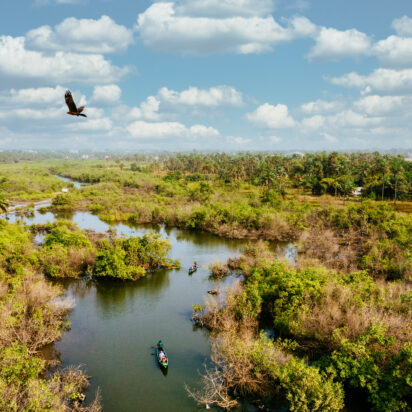
This project builds upon previous NbS interventions in Jamaica and Grenada. It focuses on the sustainable management and restoration of mangrove ecosystems in Jamaica, while in Grenada it will implement Ecosystem-based Adaptation (EbA) approaches previously identified. In all target locations, the intervention is expected to reduce vulnerabilities while increasing benefits for communities through ecosystem services. The project will also develop the capacity of EbA practitioners in these locations, forming a community of practice for EbA.
Project duration: 30 months
Objective
Sustainable management and/or restoration of ecosystems to strengthen resilience and reduce climate risks for communities in Jamaica and Grenada, while contributing to biodiversity conservation and climate change mitigation in a participatory manner.


Expected Results
- Restore 50 to 65 hectares of mangrove forest through various operations, notably nurseries and external plantations that reduce climate risks and provide other ecosystem services.
- Enhance the capacity of mangroves to act as a coastal barrier.
- Community-based mangrove restoration carried out in degraded areas of the Portland Bight Protected Area in Jamaica.
- Strengthen the participation and capacity of target communities to implement NbS activities by the end of the project.

Project logo

Donors / Client / Fund

Implementing Institution(s)
Joint Project of the International Federation of Red Cross and Red Crescent Societies – IFRC, Wetlands International and the Red Cross Societies of Jamaica and Grenada.